

PROGRAM LAUNCH CAMPAIGN | September-December 2024, ongoingClimate Ready Infrastructure Service
CRIS is a Housing, Infrastructure and Communities Canada (HICC) funded service that matches small governments and Indigenous communities that serve 30,000> people with free, fixed-term support from CUI’s Roster of Climate & Infrastructure Experts. This program was rapidly launched and scaled to meet funder requirements and organizational goals.
Campaign Goals
Secure enough expert applications to officially open the Roster of Climate and Infrastructure Experts in advance of service offerings opening in January.
Announce the CRIS as a national leadership initiative of CUI, advancing federal climate and infrastructure goals on behalf of the Climate Toolkit from Housing, Infrastructure, and Communities Canada as a part of the Government of Canada.
Generate interest in Roster services from small governments and Indigenous authorities and capture their information as leads for when the CRIS officially opens.
Key Messages
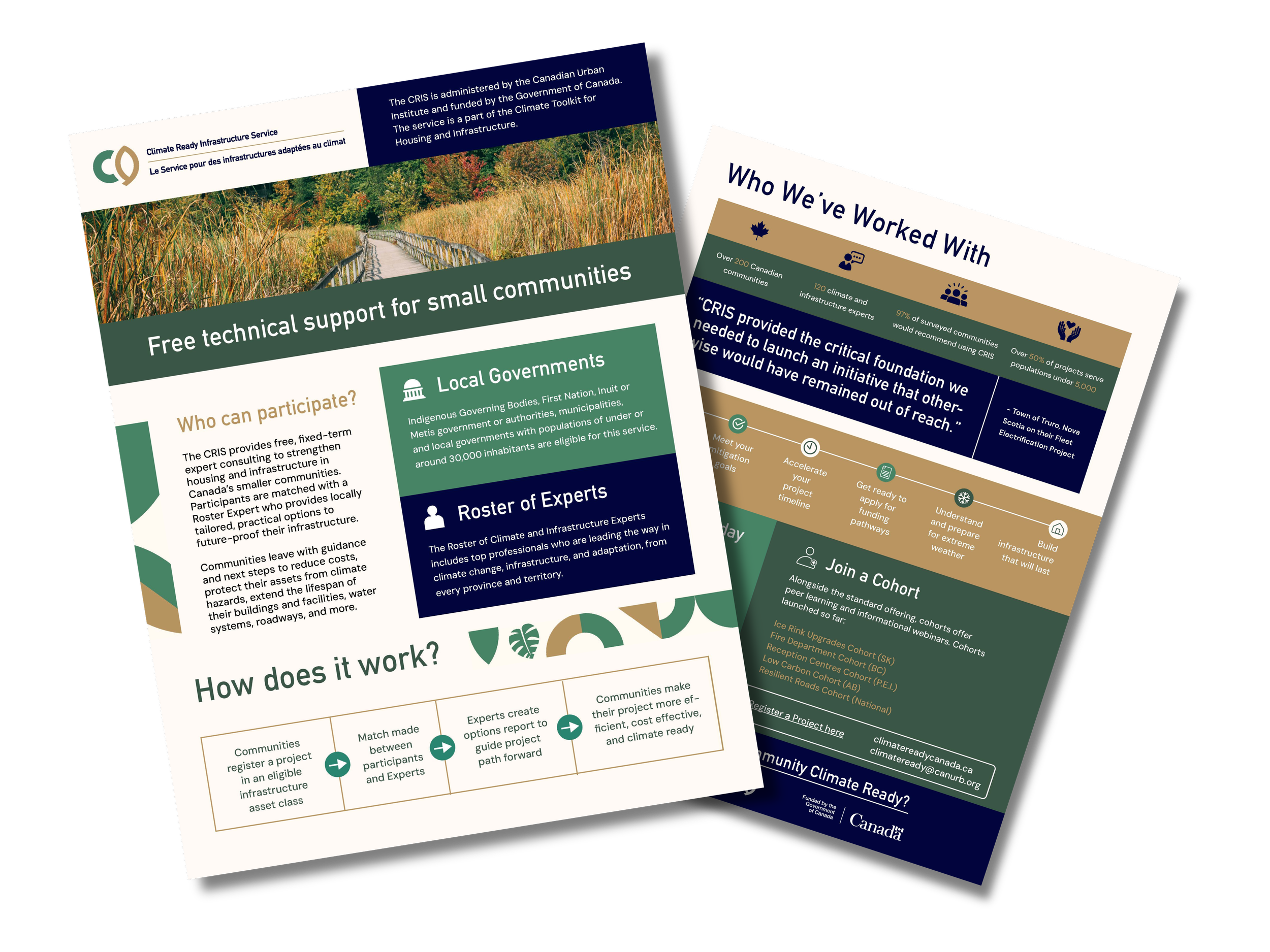
The Climate Ready Infrastructure Service (CRIS) provides free technical support to small communities for a limited time to help protect existing infrastructure projects.
Offered on a first-come, first-served basis, CRIS matches climate and infrastructure experts with project teams to provide consulting services at no cost to local governments.
Participating communities protect their infrastructure projects from climate-related hazards, extend asset lifespans, reduce long-term operating costs, and improve energy efficiency.
Experts on the Roster earn a paid opportunity to create community impact and contribute to federal climate goals.
Stakeholders & Audiences
Individuals and organizations who can:
Exert influence over infrastructure projects in their communities that are planned or underway and integrate the CRIS service into their workplan.
Join the Roster of Climate and Infrastructure Experts
Support programming within the CRIS through their organizational mandate to further Canada’s climate goals, create strong infrastructure, or support small communities
Examples:
CAOs, asset managers, infrastructure leads of municipalities, townships, or Indigenous authorities serving 30,000 people or less
Architects, engineers, energy consultants, environmental specialists,
Municipality federations, asset management groups, climate change organizations, issues-based groups (i.e. fire chiefs associations)
Channels & Content Strategy
-
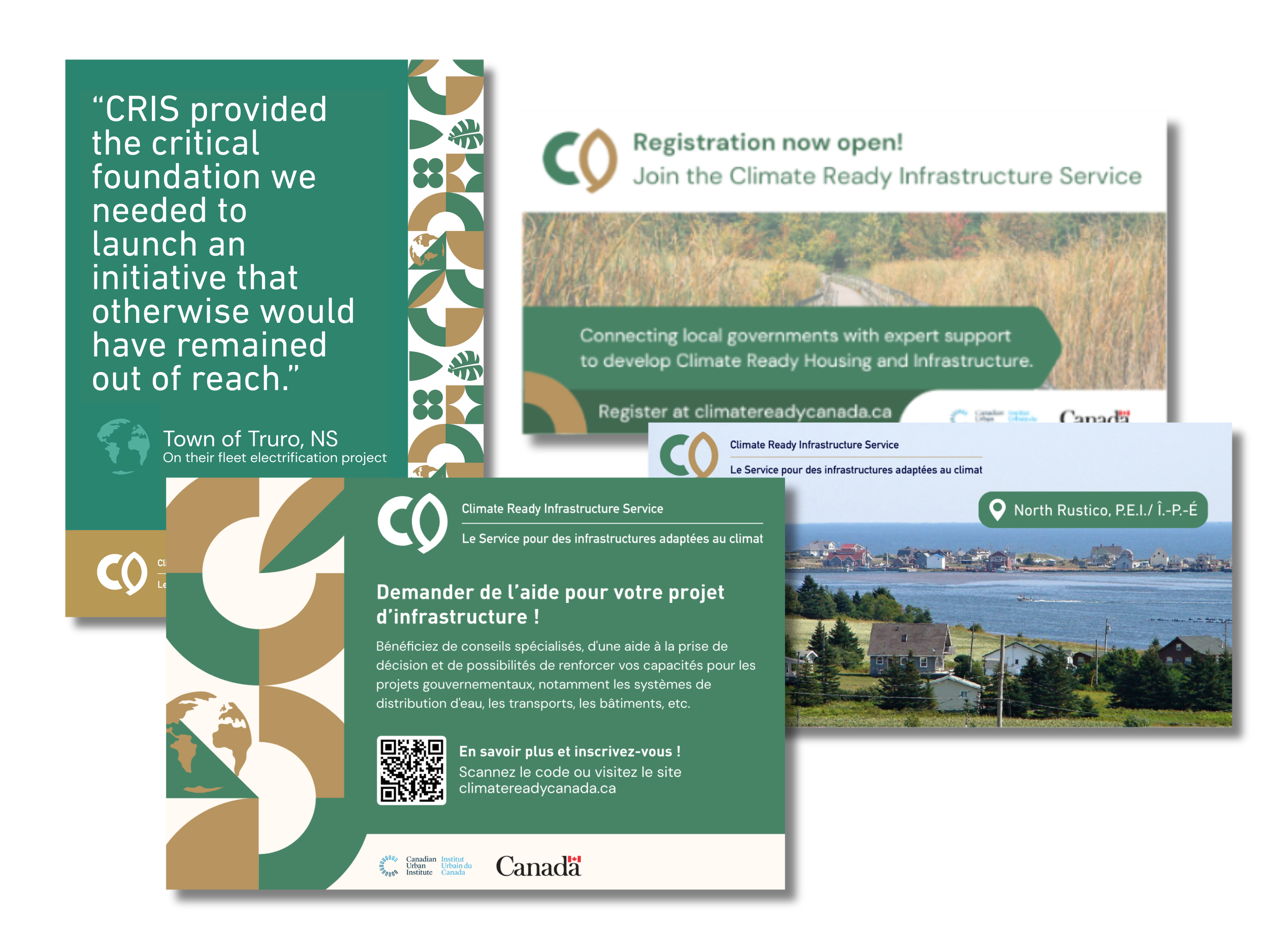
Goal: Create a new brand to sit under CUI that will resonate strongly with small governments.
Program (EN/FR)
Visual brand identity
Brand voice
-
Goal: Create a new digital hub for the CRIS program
Secure and connect a domain
Build a new website including: Home, About, Meet the Roster, Projects, Apply Now
Tools: GoDaddy, CraftCMS
-
Goal: Leverage CUI’s social media channels with an established audience to quickly spread CRIS awareness while beginning to grow independent channels.
Lean on CUI’s LinkedIn which would have greatest access to professional networks of experts, with additional use of Instagram
Create new accounts for the CRIS
Tools: Buffer, LinkedIn, Instagram
-
Goal: Leverage CUI’s established newsletter audience to spread news at CRIS program while collecting emails for a new, CRIS email list to announce the program launch to soft leads.
Create a new newsletter sign-up flow including automated welcome emails
Create an email campaign to CUI’s channels
Track and assess soft lead acquisition through email list.
Tools: GetResponse
-
Goal: Use the national platform of CUI’s State of Canada’s Cities Summit to showcase the Roster after the campaign period, and announce the official “drop” of the CRIS for local governments.
Panel discussion with CRIS lead partners
Keynote feature from Mary W. Rowe
Visuals in rolling slides interspersed throughout the day
CRIS partner meeting on day 2 of the Summit
-
Goal: Access niche audiences that CUI doesn’t traditionally have access to through CRIS Climate Co-Leads and regional partners
Identify regional partner leads and use their networks
Create outreach materials for them to use including copy and graphics
-
Goal: Get the CRIS team in-person at important climate and infrastructure events and conferences across the country.
Identify desired events
Clarify staff resources and capacity to attend
Prioritize based on engagement opportunity: presentation, trade show, attendee, etc.
-
Goal: Host information sessions for potential participants.
Create needs-based webinars including for Indigenous and francophone communities
Host and promote webinars
Funnel leads into workflow for future communications
Tools: Zoom, Zoho
New resources and MAJOR website updates coming soon!
Outcomes & KPIs
Outcomes
Successfully launched CRIS platform under compressed timelines
Built sufficient expert roster to open community intake
Established CRIS as a credible national service despite launching before program operations were live
KPIs
250 small governments joined by the end of Q1 2025, exceeding our HICC targets and already completing 35% approximately of the total 4-year program goals for participation.
About 60 experts joined the Roster of Climate and Infrastructure Experts which now hosts 108 experts and firms.
Today, over 300 subscribers follow the CRIS newsletter, demonstrating that many experts and participating governments are following along to discover project stories, new ways to engage, and additional opportunities with CUI.