
REPORT LAUNCH CAMPAIGN | June-August 2025Sacred Spaces, Civic Value: Making the Case for the Future of Faith-Built Assets
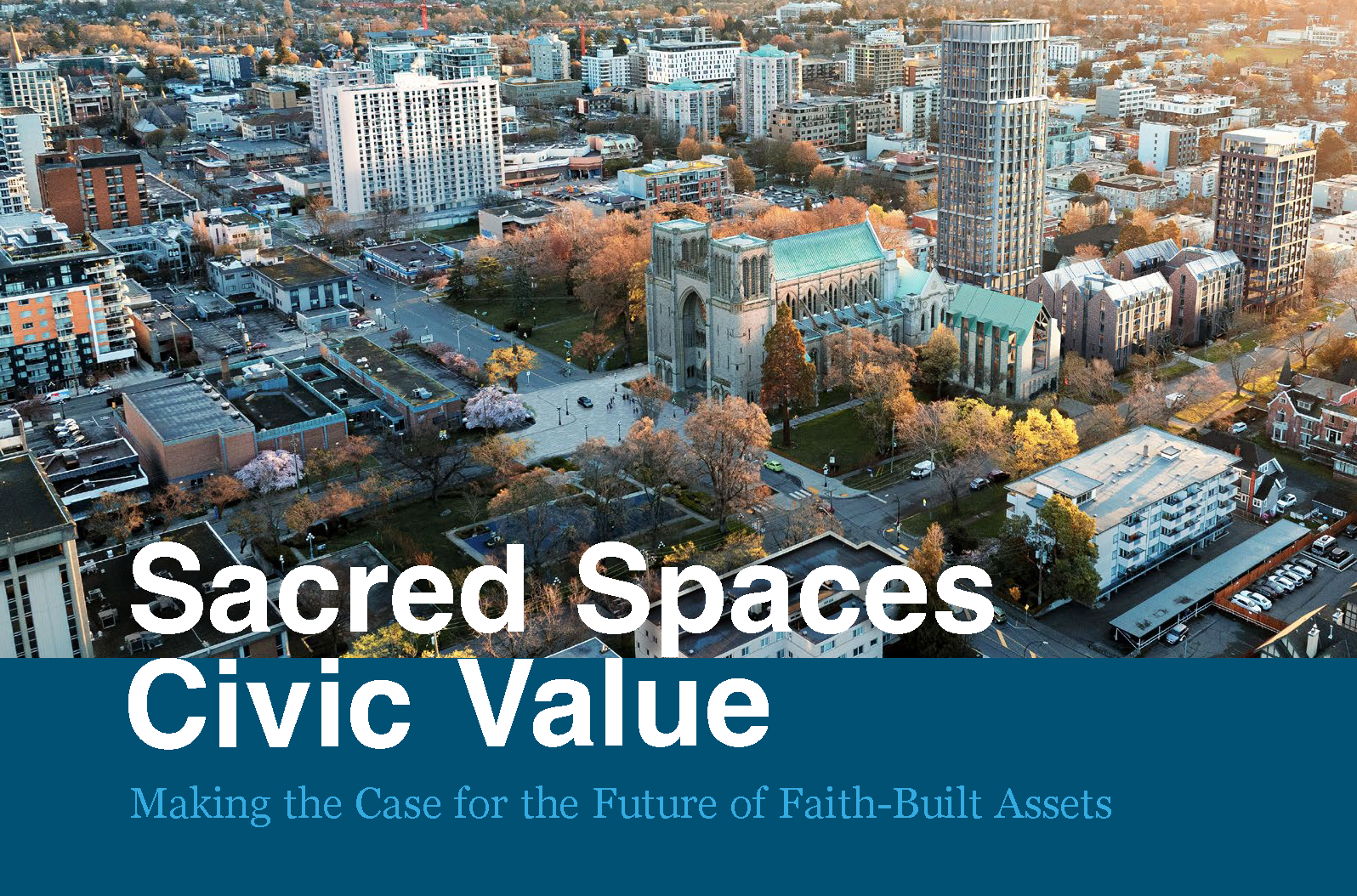
In the summer of 2025, CUI launched a report on a little-known topic, previously thought to only be relevant to religious congregations. In a competitive media landscape, CUI launched “Sacred Spaces, Civic Value” which quickly became CUI’s most successful report of all time. Now, the civic implications of lost faith buildings is an ongoing part of public discourse in cities across the country.
Campaign Goals
Elevate the loss of faith-built spaces as a critical civic issue, reframing these buildings from narrowly religious sites to essential community infrastructure that supports social connection, neighbourhood identity, and public life.
Shift public and professional narratives toward shared responsibility, making clear that the future of faith-built spaces depends on coordinated action stakeholders—not solely on congregations or charitable stopgaps.
Advance a respectful, partnership-driven conversation that honours faith communities as long-standing stewards of place and continuing to advocate for long-term, structural solutions that strengthen civic life for everyone.
Key Messages
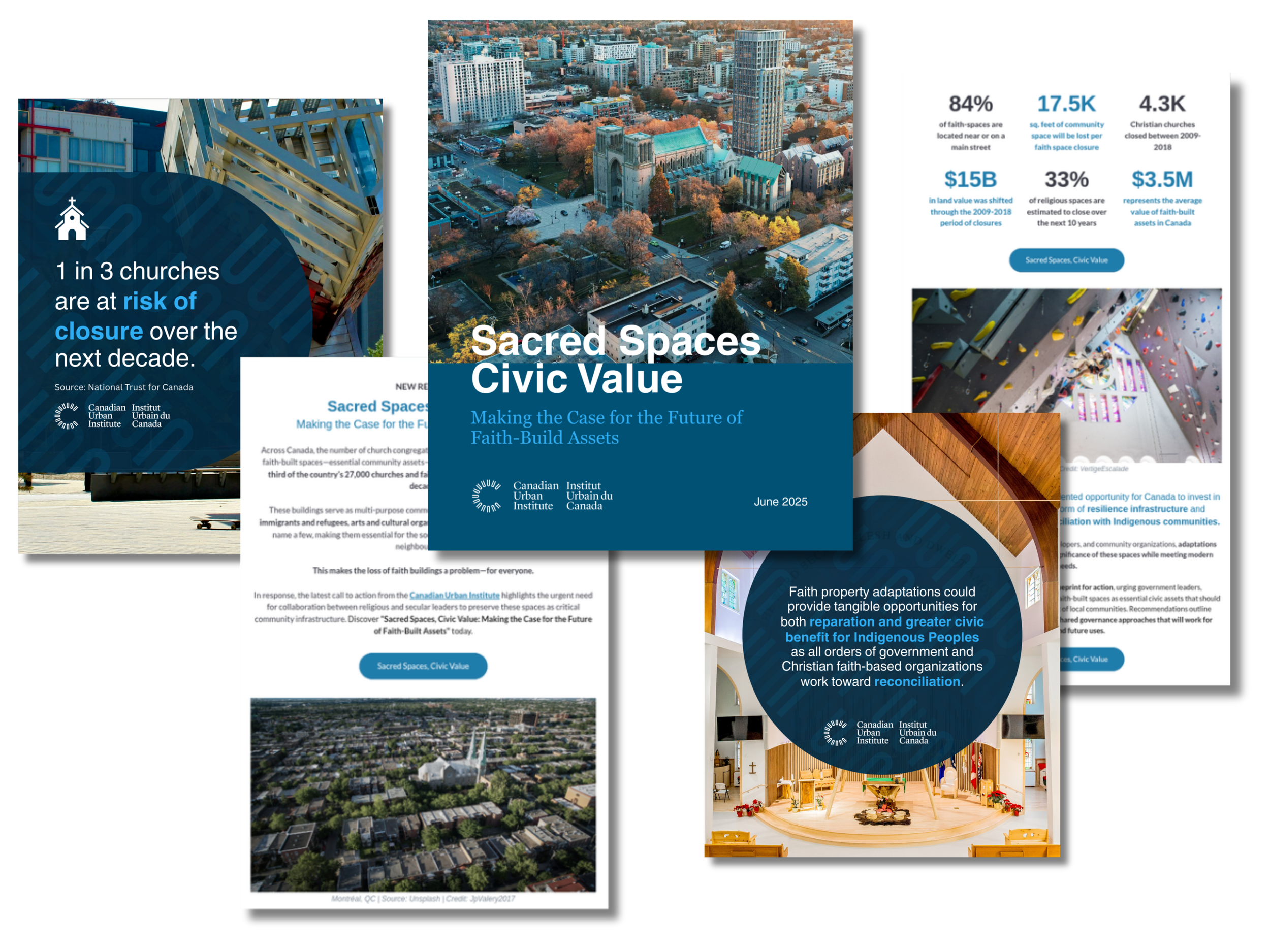
Nearly one-third of Canada’s 27,000 churches and faith-built spaces could close within the next decade
84% of non-profit organizations and community groups that use space in a faith building have no realistic alternative if the faith building shuts down—including childcare services, food banks, cultural events, and essential social services.
These vital hubs face existential threats due to inaction, unclear mandates, and jurisdictional grey zones.
In 2026, there is an urgent need for collaboration between religious and secular leaders to preserve faith-built spaces as critical community infrastructure.
Examples:
Faith space leaders and denominational bodies
Municipal governments and policy makers
Housing advocates
Non-profit, community service, arts and cultural organizations
National funders invested in place-based social infrastructure
Developers working on sites with faith-built assets
Architects and planners working on adaptive reuse
Philanthropic partners
Stakeholders & Audiences
Individuals and organizations who can:
Embrace adaptation of their faith-space or faith-space project to create community benefit in a real example.
Join or amplify the public narrative around the collective ownership and impact of faith-built spaces.
Advocate for low-barrier access to space for community groups and social services including these groups.
Center Indigenous voices in conversations about faith spaces and the land they sit on, where there are real opportunities for reconciliation and justice.
Channels & Content Strategy
-
Goal: Create a central hub for all resources related to the “Sacred Spaces” report.
A dedicated report landing page under the ‘Publications’ category at canurb.org
A report feature in the rotating banner of the home page of canurb.org
Tools: WordPress, Elementor
-
Goal: Generate broad, public attention of the “faith space” issue, while supplying practitioners and those impacted with a new resource.
Announcement post
3-image carousel post featuring key messages
2 individual graphic posts
Leverage visuals of real faith-built adaptations through our partners
Clear CTA
Tools: LinkedIn, Instagram, Buffer, LinkTree
-
Goal: Alert CUI’s highly engaged newsletter audience of urbanists to a new practitioner resource.
Storytelling about challenge and opportunity
Compelling data points
Impactful photos
Quotes from report and key partners
Clear CTA
Tools: GetResponse
-
Goal: Secure industry-specific coverage about the loss of faith-built spaces and earn local media coverage in Canadian case study cities (Montreal, Winnipeg, Victoria)
Conduct a media scan of past stories done on the topic
Craft a pitch using report background, key data points, and stakeholder quotes
Generate list of relevant journalists, columnists, and publications.
Media release to a targeted list of reporters broad issue of faith space closures
Targeted pitches to local media in each case study city
Tailored outreach to faith publications on broad issue of faith space closures
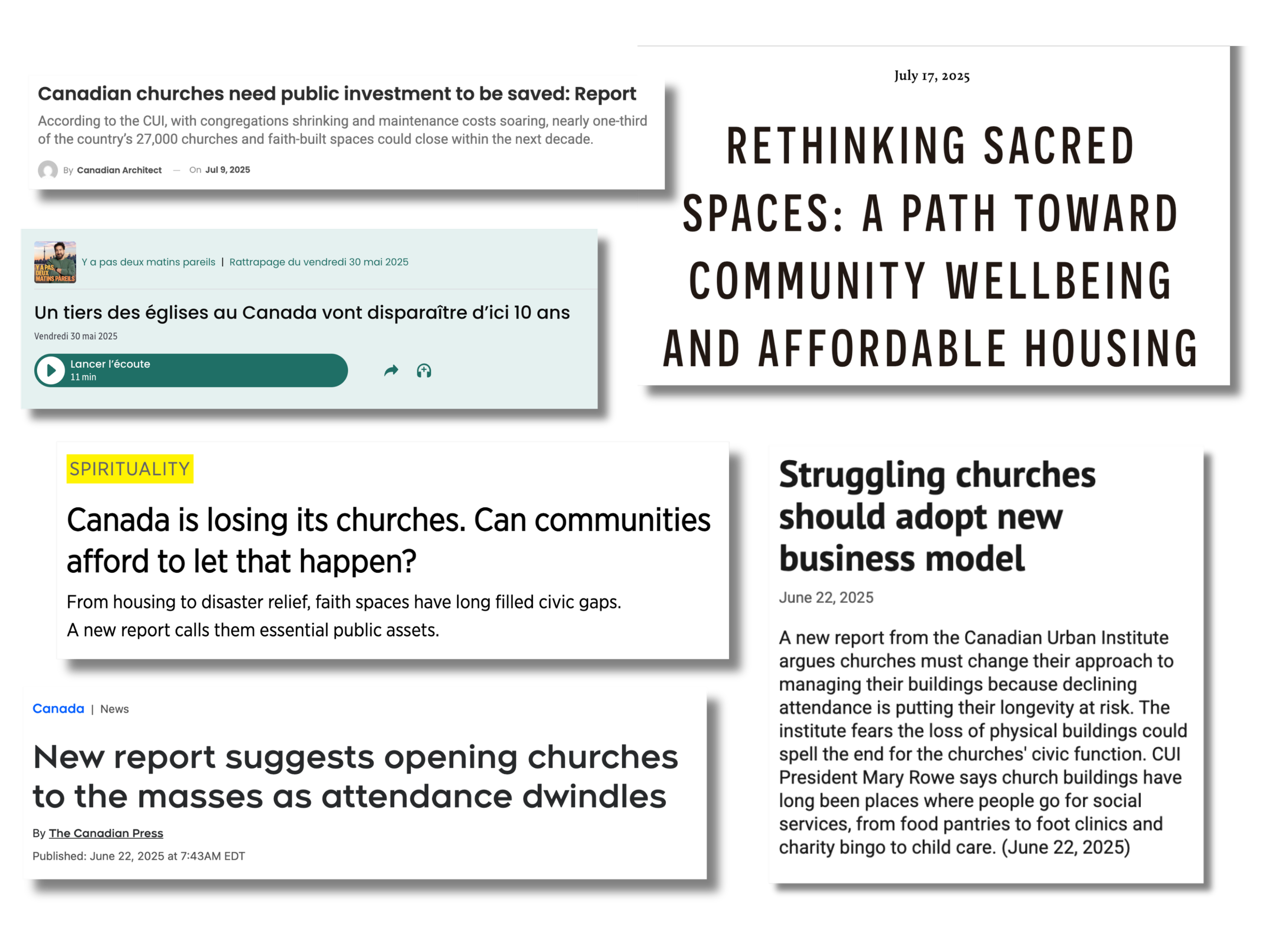
Highlighted Stories: Radio Canada, National Post, Toronto Star, CTV National, CP24, NRU, Canadian Architect, Releven, Broadview Magazine
Team Support: Media Consultant
Tools: N/A
-
Goal: Host a CityTalk Live Webinar about the loss of faith-built spaces for knowledge mobilization and amplified reach.
Shortlist potential panellists and secure based on availability
Set up virtual event infrastructure
Create promotional materials for social media, newsletter, website, and media (advisory)
Host the CityTalk
Create recording, key takeaways, transcript, and share with registrants and panellists.
Sacred Spaces, Civic Value: Reimagining Faith Buildings for Community Resilience
-
Goal: Kick-start adoption of Sacred Spaces resources by urban practitioners.
Generate list of relevant experts, influencers, practitioners, and organizations working on faith-built assets and adaptation
Import the list into our CRM
Craft outreach materials for each audience
Tools: HubSpot
Outcomes & KPIs
Outcomes
Most viewed report in CUI history, despite a niche topic and competitive news cycle.
KPIs
5,000+ views in first month
66% newsletter open rate; 34% CTR
10K impressions, 6.5% engagement rate, and 4.5% CTR on LinkedIn and Instagram
303 media hits in first month; 3.8M potential readership with hits across national, regional, and sector-specific outlets – 3x industry standard for good coverage
Highlighted Stories: Radio Canada, National Post, Toronto Star, CTV National, CP24, NRU, Canadian Architect, Releven, Broadview Magazine